Resource Libraries
Ozone Therapy in Dentistry: What PubMed Research Shows
A curated set of peer-reviewed PubMed studies on ozone therapy in dentistry, covering bacterial reduction, wound healing, gum outcomes and its adjunct role.
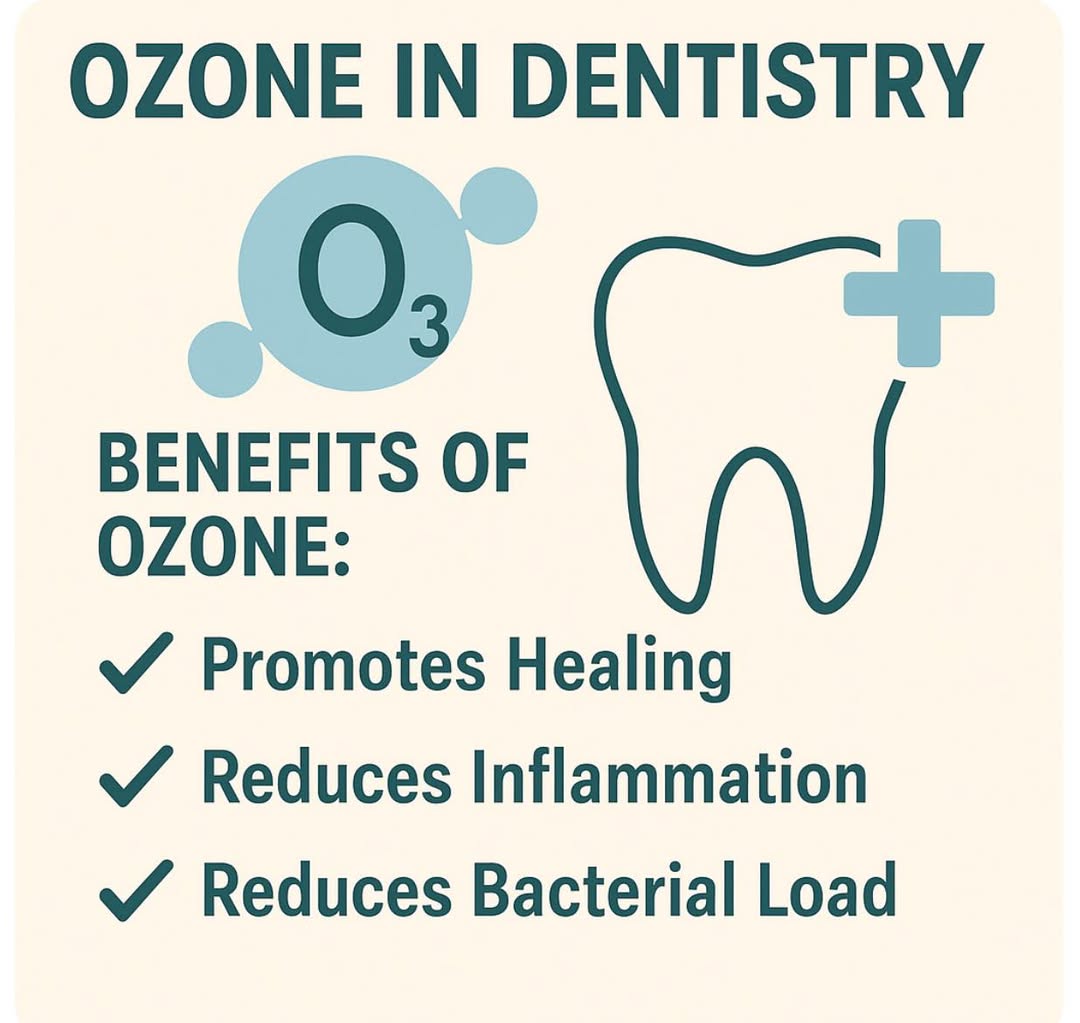
Ozone in Dentistry: What the Science Actually Shows
There are a growing number of dentists, hygienists, and allied dental professionals on this platform, as well as an increasing number of medical professionals, including functional medicine doctors, nurses, physician assistants, homeopaths, naturopaths, holistic wellness professionals and coaches.... and the variety and number is growing! Not all of you know what ozone is or its benefits, so I will show you the science behind it. Since I spend a lot of time educating the public anyway, I thought it would be helpful to also speak directly to the professionals here.
Fair warning: this is a science-heavy post. You know me by now — I’m a science girl.
Ozone therapy isn’t something we use because it’s trendy or “alternative.” We use it because it’s well-studied and consistently shown in the literature to:
-
Reduce bacterial load
-
Modulate inflammation
-
Support tissue healing
-
Improve post-operative outcomes
There are dozens of dental-specific studies and even more in vitro (lab-based) studies. I’m not posting all of them here, but below are a BUNCH of representative studies (at least 2 dozen) that clearly demonstrate why ozone has a place in biological dentistry.
I’ll summarize each one in plain English for the folks who don't really care for the actual scientific study and just want the gist of it, and link the PubMed article so you can review it yourself if you want to. Facebook constantly broke my links, so this is why I'm so happy to be on this platform.
So What Is Ozone, Clinically Speaking?
Ozone (O₃) is a triatomic oxygen molecule. It’s highly reactive, which is exactly why it works.
In dentistry, ozone can be delivered as:
-
Gas
-
Ozonated water
-
Ozonated oils
-
Nano-bubble water
Its effects are local, short-acting, and non-toxic when used properly, which is key. Ozone does not linger. It reacts, performs its function, and reverts to oxygen.
What the Research Shows (Plain English)
Study 1: What is Ozone Therapy and How Does it Work in Dentistry?
Review paper written to help medical doctors understand ozone therapy in dentistry. Ozone is oxygen with three atoms instead of two, making it highly reactive. It works through three mechanisms: (1) kills germs through oxidation, (2) reduces inflammation, and (3) promotes healing by improving blood flow. Dentists deliver it as gas, ozonated water, or in gels. The paper emphasizes that oral health connects to overall body health—treating mouth infections with ozone may help prevent heart disease, blood sugar problems, and other systemic issues. Bottom line: Ozone can be safely and effectively used in dental care when applied correctly by trained professionals.
https://pubmed.ncbi.nlm.nih.gov/25363268/
Study 2: Ozonated Water After Wisdom Tooth Surgery
100 patients had wisdom tooth surgical sites rinsed with ozonated water, normal saline, or povidone-iodine. Ozonated water significantly reduced dry socket occurrence and post-surgical pain compared to the other solutions. No difference in jaw stiffness or infection rates. Patients in the ozone group also needed fewer pain medications after surgery. Bottom line: Ozonated water helps patients recover more comfortably with fewer painful complications after wisdom tooth removal.
https://www.ncbi.nlm.nih.gov/pmc/articles/PMC7586537/
Study 3: Ozone versus Root Canal Bacteria
Laboratory study testing ozone (gas and water forms) against four common root canal bacteria, including tough Enterococcus faecalis. Scientists tested bacteria floating freely and stuck in protective biofilms (slime layers). High-concentration ozone killed free-floating bacteria almost as well as sodium hypochlorite. For biofilms, ozone completely eliminated bacteria after 1-2.5 minutes, but effectiveness depended on concentration, time, and bacterial type. Bottom line: Ozone may be useful as an additional treatment alongside conventional disinfectants, especially when standard chemicals cannot be used.
https://pubmed.ncbi.nlm.nih.gov/19125975/
Study 4. Ozone and Inflammation (NF-κB Pathway)
Laboratory study investigating how ozone water affects inflammation at the molecular level by examining NF-kappaB—a key "master switch" that controls the body's inflammatory response. Scientists tested ozone water on lab-grown oral cells and real diseased tissue from patients with gum disease. Ozone water significantly blocked the NF-kappaB inflammatory pathway, preventing cells from producing inflammatory chemicals that cause swelling and tissue damage. The treatment stopped IkappaBalpha breakdown (which normally triggers inflammation), prevented cytokine production, and blocked inflammation-related gene activation. Importantly, ozone water didn't harm healthy cells while blocking inflammation. Specific ozonized amino acids were identified as the main anti-inflammatory components. Bottom line: Ozone water has anti-inflammatory properties at the molecular level, explaining how it works beyond just killing germs—it also reduces the harmful inflammation that damages gums and bone in periodontal disease
https://pubmed.ncbi.nlm.nih.gov/17452567/
Study 5. Ozone and Cellular Stress Response
Laboratory study examining how ozone ultrafine bubble water (OUFBW) affects human periodontal ligament fibroblasts and gingival epithelial cells. Scientists treated cells with OUFBW and analyzed cellular responses using RNA sequencing. OUFBW induced oxidative stress by generating reactive oxygen species (ROS), which activated the MAPK signaling pathway. The treatment triggered activation of c-Fos (part of the AP-1 transcription factor) and Nrf2 (a key regulator sensitive to oxidative stress). RNA analysis revealed numerous genes involved in oxidative stress responses and MAPK signaling were upregulated after OUFBW treatment. These findings show OUFBW activates cellular stress response pathways that may contribute to tissue healing and adaptation, beyond just killing bacteria. Bottom line: Ozone ultrafine bubble water has biological effects on periodontal tissues beyond its antimicrobial activity, activating cellular signaling pathways involved in oxidative stress responses that may support periodontal treatment.
https://pubmed.ncbi.nlm.nih.gov/31258824/
Study 6. Ozone as an Adjunct in Chronic Periodontitis
Randomized controlled trial with 90 patients with moderate or severe periodontitis. Forty-five patients received scaling and root planing (SRP) plus gaseous ozone therapy; forty-five received SRP alone. At 3 months, the ozone group showed statistically significant improvements in clinical attachment level (CAL), probing pocket depth (PPD), and bleeding on probing (BOP) compared to SRP alone (all p ≤ 0.0001). The study was conducted from September 2019 to October 2020, with follow-up at 3 and 6 months. Bottom line: SRP combined with gaseous ozone therapy in the treatment of periodontitis revealed improved outcomes compared to SRP alone, with patients no longer meeting criteria for active periodontitis at follow-up.[1]
https://pubmed.ncbi.nlm.nih.gov/35055807/
Study 7. Ozone vs NaOCl & Chlorhexidine in Apical Periodontitis
Study: Ozone Gas versus Standard Disinfectants for Root Canal Treatment
This study tested whether ozone gas could work as well as the standard chemicals dentists use to kill bacteria during root canal treatment. Sixty teeth with infections at the root tips were randomly divided into two groups: one treated with ozone gas, the other with sodium hypochlorite (NaOCl) 3% followed by chlorhexidine (CHX) 2%. Both treatment methods worked equally well. The ozone group had success rates of 96.2% at 6 months and 95.5% at 12 months. The standard chemical group had success rates of 95.5% at 6 months and 95.2% at 12 months. There were no significant differences between groups in bacterial reduction, infection improvement, or healing. Bottom line: Ozone gas performed just as well as standard disinfectants for treating root canal infections, suggesting ozone may be a viable alternative, especially when standard chemicals cannot be used.
https://pubmed.ncbi.nlm.nih.gov/27173580/
Study 8. Ozone and Gum Graft Healing
This study tested whether ozone therapy could help gum grafts heal better and faster. Gum grafts are procedures where tissue is taken from one part of the mouth (usually the roof of the mouth) and placed in another area to build up the gums. Thirty patients received gum grafts and were randomly divided into two groups: one received ozone therapy applied immediately after surgery and on days 1 and 3, while the other group received no ozone treatment.
What They Found
Ozone therapy significantly improved blood flow to the grafted area during the first week after surgery (days 1, 2, 3, 6, and 8; p < 0.001). Better blood flow means better healing. Patients who received ozone therapy also had significantly less pain at both the donor site (roof of mouth) and recipient site (where the graft was placed) during the first week (p < 0.05). Additionally, patients in the ozone group reported significantly better quality of life on day 6 after surgery (p = 0.002).[1]
Bottom line: Ozone therapy enhanced blood flow to gum grafts during the first postoperative week, which improved wound healing. Patients who received ozone therapy experienced less pain and better quality of life during recovery.
https://pubmed.ncbi.nlm.nih.gov/26777769/
Study 9. Ozone and Bone Graft Healing (Animal Study)
Animal study testing whether ozone therapy could improve bone healing when combined with bone grafts. Twenty-seven rats had skull defects created and were divided into three groups: bone graft alone, bone graft plus ozone therapy (80% ozone, applied for 30 seconds, 3 times daily for 2 weeks), or no treatment. After 8 weeks, researchers measured bone healing. The bone graft plus ozone group showed significantly better results than bone graft alone: nearly double the total bone area (9.3 vs 5.1, p < 0.05), over six times more bone-building cells called osteoblasts (58 vs 9.3, p < 0.05), and significantly more new bone formation (p < 0.05).
Bottom line: In this rat study, ozone therapy enhanced bone graft healing by increasing new bone formation and bone-building cell activity, suggesting potential benefits for bone regeneration procedures.
https://pubmed.ncbi.nlm.nih.gov/23452156/
Study 10. Ozonated Oil and Gum Healing
This study tested whether ozonated oil (plant oil treated with ozone) could help gum graft surgical sites heal better. Twenty patients requiring free gingival grafts were randomly assigned to two groups: one group received ozonated oil applied to the surgical wound, and the other received non-ozonated oil as a control. Researchers used cytological analysis (microscopic examination of cells) to assess healing at multiple time points from 24 hours to 18 months after surgery. The ozonated oil group showed significantly better epithelial healing (p < 0.001) by days 7, 14, and 21, and at 2, 3, and 8 months postoperatively, compared with the control group. The improvement in healing was measured by keratinization and superficial cell indices, which indicate how well the protective outer layer of gum tissue is forming.
Bottom line: Topical application of ozonated oil to gingival surgical sites significantly improved epithelial healing and gingival health, with benefits lasting up to 8 months after surgery
https://pubmed.ncbi.nlm.nih.gov/22555530/
Study 11. Ozone Nano-Bubble Water in Periodontitis
Randomized controlled trial with 22 patients assigned to full-mouth mechanical debridement with either tap water or ozone nano-bubble water (NBW3). Clinical examination was performed at baseline, 4 weeks, and 8 weeks; microbiological examination at baseline, immediately post-treatment, 1 week, and 8 weeks. Both groups showed significant improvements in all clinical parameters after 4 weeks, but the NBW3 group had significantly greater reduction in probing pocket depth and clinical attachment gain at both 4 and 8 weeks compared to tap water (p < 0.05). Additionally, only the NBW3 group showed statistically significant reductions in the mean total number of bacteria in subgingival plaque over the study period. Bottom line: Subgingival irrigation with ozone nano-bubble water is a valuable adjunct to periodontal treatment, providing superior clinical and microbiological outcomes compared to tap water irrigation.
https://pubmed.ncbi.nlm.nih.gov/22422082/
Study 12. Ozone Therapy Strategic Review
This review paper explains how ozone therapy works in dentistry and why it may be beneficial. The mouth is an open ecosystem where bacteria constantly try to colonize tooth and gum surfaces, forming biofilms that cause dental caries, periodontal disease, and peri-implantitis. Traditional treatment involves mechanical biofilm removal plus antibiotics or disinfectants. Ozone (O₃) is a triatomic oxygen molecule that has been indicated for treating 260 different pathologies in medicine and dentistry. The review concludes that ozone therapy offers more benefits than conventional therapeutic modalities by following a minimally invasive and conservative approach to dental treatment. Understanding ozone's molecular mechanisms further supports its practical function in dentistry. Bottom line: Ozone therapy represents a minimally invasive alternative to conventional dental treatments for managing oral biofilms and associated pathologies.
https://pubmed.ncbi.nlm.nih.gov/22346227/
Study 13. Orthodontic Gingivitis & Ozonated Water
Pilot study with 15 orthodontic patients (mean age 17.3 years) who received a single subgingival irrigation with ozonated water (0.01 mg/L). Researchers measured gingival inflammation, plaque, bleeding, and lactate dehydrogenase (LDH) enzyme levels in gingival fluid at baseline, 14 days, and 28 days. A single ozonated water irrigation significantly reduced all clinical parameters of gingival inflammation (P < 0.05), decreased LDH enzyme activity, and reduced gingival fluid volume at both 14 and 28 days. There was a significant correlation between plaque reduction and LDH reduction (r = 0.50, P = 0.01). Bottom line: One subgingival irrigation with ozonated water effectively reduced gingival inflammation in orthodontic patients for up to 28 days, though larger randomized controlled trials are needed to validate these findings.
Account required
Sign in to see more
Create an account or sign in to unlock the full list.