Resource Libraries
Root Canal on a Child's Permanent Front Tooth: What to Know
What happens when a child's permanent front tooth dies, why holding that tooth until facial growth ends around age 18 to 21 matters, and the options to weigh.
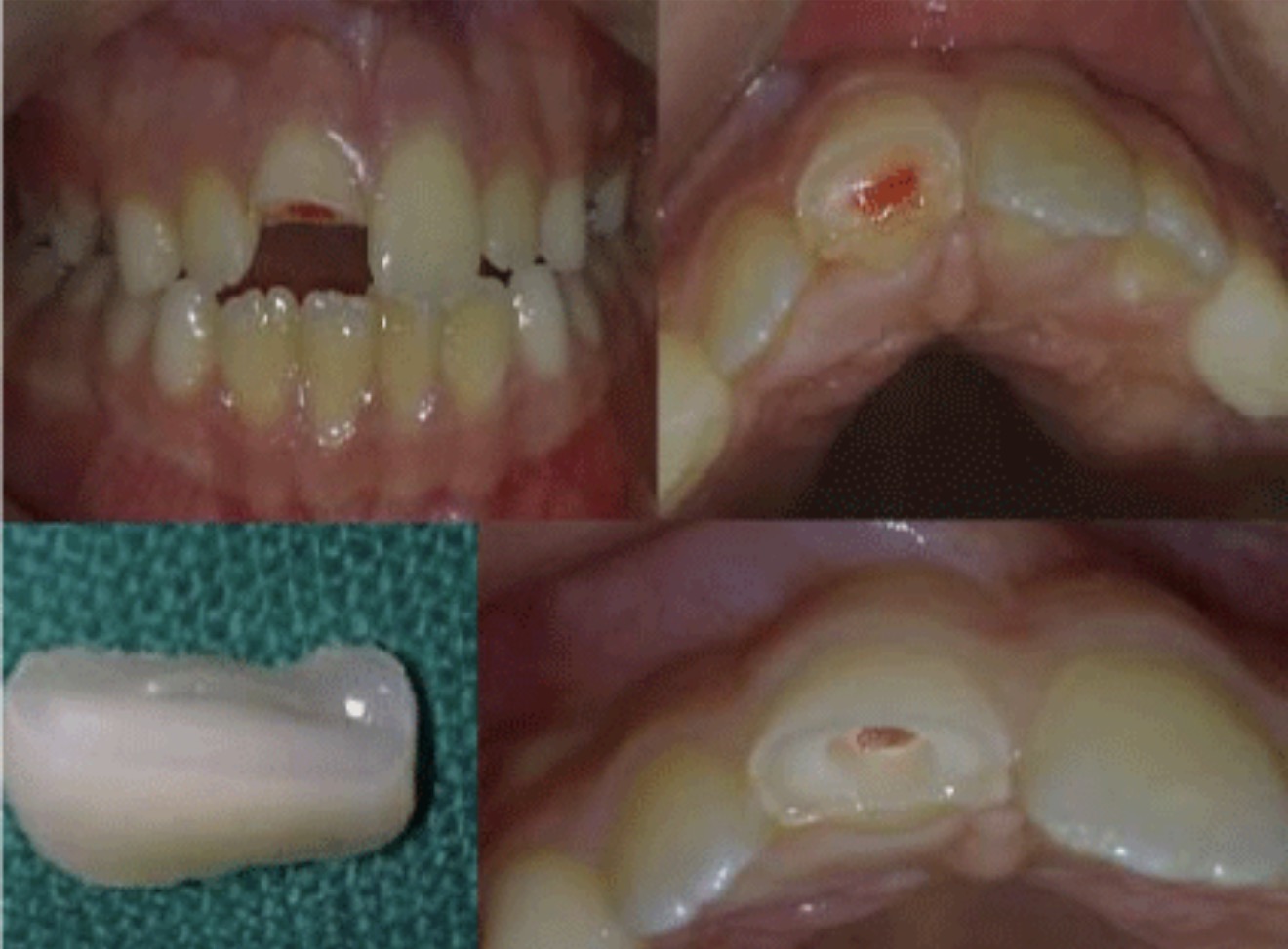
Root Canals on Permanent Front Teeth in Children
I have seen this question SO many times that I decided it’s time to address it on our platform as a separate subject. It's one of the most common childhood injuries, so it makes sense to give it an entire resource blog. The question is… what to do when a child breaks their permanent front tooth to the nerve, gets a cavity in the permanent front teeth to the nerve, or kills a front permanent tooth from trauma? So I’m going to give you my honest advice.
It is critically important for children to keep their permanent incisors if those situations arise, even if it means opting for root canals, until they are fully grown. This is especially true for boys, who will not complete their growth until around age 22. Girls are usually finished growing by age 16, though waiting until they are at least 20 is a good idea. Although root canals on permanent young teeth can be a challenging decision for parents, retaining these front teeth through adolescence and young adulthood plays an essential role in ensuring proper bone structure, facial symmetry, and long-term oral health.
Bone Preservation and Growth
The permanent incisors, or front teeth, act as essential anchors for maintaining the bone structure in a child’s jaw. When teeth are lost prematurely, the bone in that area tends to resorb, or deteriorate, due to lack of stimulation from the tooth root. This process of bone loss begins almost immediately after a tooth is removed and becomes increasingly pronounced over time. In a growing child, where the bones of the face and jaw are still developing, this loss can severely affect the entire area. Once bone loss occurs, reconstructing that area is extremely challenging (and often impossible), even with advanced bone grafting techniques. Many cases show that grafted bone cannot fully restore the original volume and structure that natural teeth would have maintained. For a young person, the loss of bone from an extracted tooth can have permanent effects that significantly impact their dental and facial health throughout their life.
The experience of individuals who have lost their incisors early highlights these challenges. This subject hits close to home for my family. My ex-husband lost his central and lateral incisors at age 13 and suffered considerable bone loss in that region over the years. By the time he was 22, the bone in that area had become “knife-edged” and insufficient for ideal restoration, despite multiple attempts to repair it through surgeries. His experience demonstrates how difficult it can be to restore missing bone in the front teeth, often leaving visible differences and leading to a compromised esthetic result. His story underscores the importance of preserving the front teeth, if possible, during childhood to avoid these long-term structural and cosmetic issues.
The Role of Incisors in Facial Symmetry and Development
The presence of front teeth is also crucial for facial symmetry and proper growth of the jaw and skull. The front teeth serve as support structures, helping guide the development of the facial bones. Without these teeth, the natural growth pattern of the jaw can be disrupted, potentially leading to asymmetries and alignment issues. If a child loses an incisor prematurely, the surrounding teeth may shift, the bite can collapse on that side, and facial symmetry can be affected. This can impact not only the appearance but also the function of the jaw, leading to problems with chewing and even with the airway.
The development of the airway is closely related to the structure of the jaw and alignment of the teeth. The positioning of the front teeth contributes to a proper airway, and early loss of these teeth can interfere with this development, sometimes leading to compromised breathing patterns. Consequently, preserving front teeth during the growth years is essential to ensure an optimal airway and support a well-balanced bite.
The Science - because we are ALWAYS about education
PMID: 17991231 - This study quantified alveolar bone resorption following permanent maxillary incisor loss in children (mean age 10.8 years). At 3 months post-extraction, the edentulous area was 15.7% less than the dentate side, increasing to 25.3% at 6 months, with stabilization at approximately 22% overall tissue loss. This demonstrates that premature incisor loss leads to significant, measurable bone resorption in young patients.
PMID: 36804746 - This review emphasizes that treatment of traumatized immature incisors should focus on long-term consequences, stating "any time gained with the tooth in the jaw bone, free of infection, is an achievement, as it allows normal growth and development." The authors note that premature tooth loss can influence jaw bone development and growth.[3]
Root Canal Treatment in Immature Permanent Teeth
PMID: 35459824 - This comprehensive review discusses pulp therapy and root canal treatment techniques specifically for immature permanent teeth, noting that approximately one in ten children will have sustained dental trauma to a permanent incisor by age 15. The paper reviews various treatment modalities for preserving traumatized immature teeth.[4]
PMID: 37385539 - This long-term study (4-15 years follow-up) of endodontically treated traumatized immature upper incisors found that 86.9% of teeth remained functional after a median follow-up of 7.3 years, supporting the value of preserving these teeth through endodontic treatment.[5]
PMID: 34862800 - This review on endodontic management of traumatic injuries emphasizes that "the prognosis of traumatized teeth depends largely on the fate of the pulp and its treatment," highlighting the importance of appropriate endodontic intervention to maintain teeth.
Growth and Development Considerations
PMID: 31152620 and PMID: 31623906 - These reviews discuss how orofacial trauma affects the developing dentition and emphasize the importance of long-term follow-up to diagnose and treat complications. The authors note that effects on permanent teeth can influence "proper development and growth of the jaw bones".[7-8]
Account required
Sign in to see more
Create an account or sign in to unlock the full list.